History of Saree its Origin and Evolution.
Introduction
The saree is not just a garment but a living culture, tradition and craftsmanship of our country, India. It is one such garment which has been worn and used by Indian women for centuries. The saree has now risen from being a normal garment to become a global fashion statement. This blog is also about the origin, evolution and modern usage of the saree.
As weavers, we know how much hard work and skill goes into crafting a saree.
Origin of Saree
The saree has been used by Indian subcontinental women for more than 5000 years. Mention of the saree is also found in some Sanskrit and Buddhist Pali literature and is also seen in many sculptures in which women can be seen wearing it. Saree is generally used in any social programme, festival or ceremony, or even for daily wear; basically, on every occasion, saree is the first choice of women of all ages.
Evolution of Saree
Indus Valley Civilisation
In the Indus civilisation around 2800–1800 BCE, drapery was used to cover the body, which was like a saree. Some 1st century sculptures discovered by archaeologists, like terracotta figures, show women wearing a long cloth which appears like a saree.

2nd century BCE terracotta figurine in a sari-like drape.
Vedic Period (1500BC-500BC)
The word ‘sari’ is derived from the Sanskrit word ‘sattika‘ – the cloth that is draped over the body. Pauranic texts like the Rigveda, Ramayana, and Mahabharata mention and depict that women’s cloth was divided into three parts-
Upper cloth – Uttarian,
Chest band- Stanapatta,
Lower drape – Antariya.
This combination is considered the saree of the early period.
Mughal Era (16th century - 19th century)
Mughals were known for their art and craftsmanship. They played a significant role in recreating and beautifying the saree. With their arrival in India, some more changes were seen in sarees, like luxurious fabric (silk) and weaving technology like embroidery, zardozi, chikankari, zari border, pallu, and motifs. Mughal influence turned the saree into a status symbol.
Colonial Era
By the time the British came to India, the saree was fully established. One more change, or should I say a final change, was seen in Victorian times – the blouse and petticoat. A blouse or petticoat was worn on the body before wearing the saree.
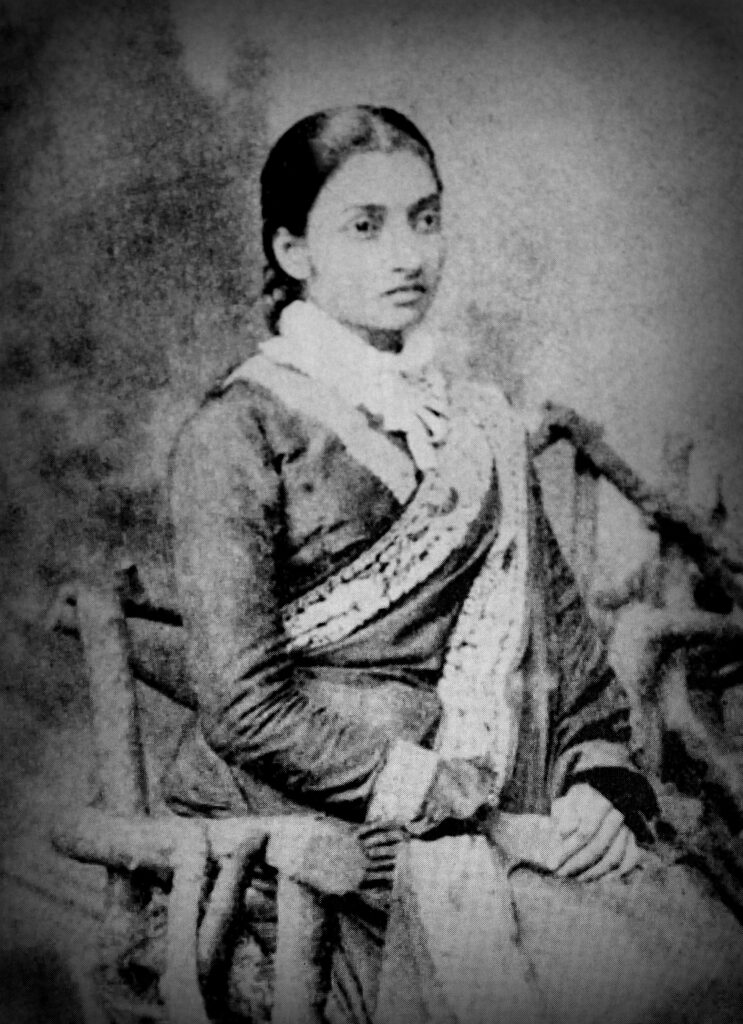
In the 19th century, Jnandanandini Devi, a social reformer and Ravindranath Tagore’s sister-in-law, adopted the blouse and petticoat with a saree. Her way of wearing a saree had a touch of traditional Bengali, Gujarati and Persian style. This method proved to be more modest, which is still prevalent today.
Pre-Independence
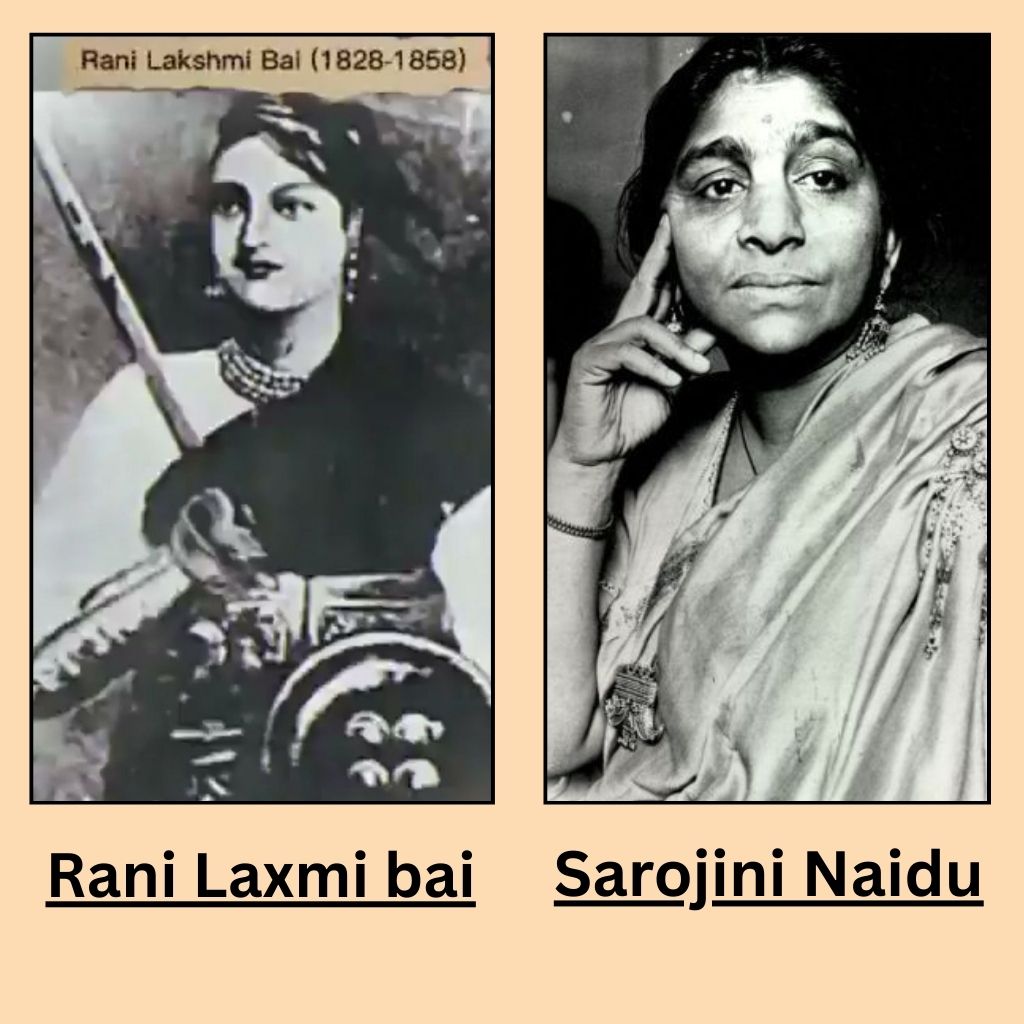
Rani Lakshmibai is known to every child in the country: ‘Khub ladi mardani woh to Jhansi wali rani thi.’ Her unique style of wearing a saree (dhoti-style sari) allowed her to be comfortable in battle and while riding horses. For her, the saree was a warrior uniform, a powerful symbol of defiance against the British.
Women freedom fighters had a huge contribution in the fight for the country’s independence, and the saree became their powerful symbol which showed women’s empowerment. During the Swadeshi movement, when foreign British goods were being boycotted, Swadeshi clothes got a boost, and Khadi became the centre of attraction.
In 1920, an Indian delegation participated in the political event in Berlin, and they did not have any flag. Then Sarojini Naidu (Nightingale of India) gathered Indian women and said, ‘Tear your saree; we will make our own flag.’ The flag was made from pieces of different -coloured sarees.
Post-independence
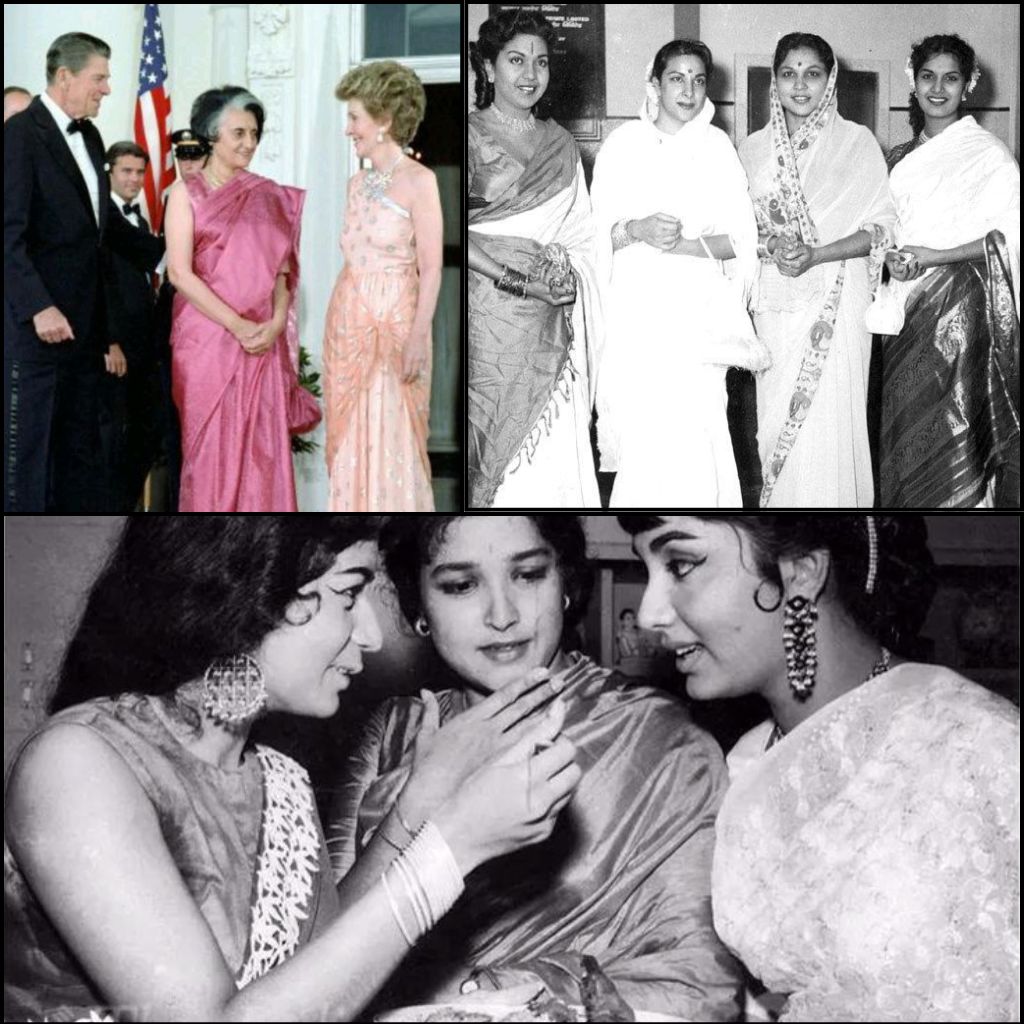
During the post-independence era, the saree became a national identity and a symbol of women’s empowerment. Women political leaders wore saree, whether on national or international platforms. The combination of chiffon or georgette light-fabric saree, stylish blouses, or the popular nivi drape captivated fashion and Bollywood.
Modern Day Saree
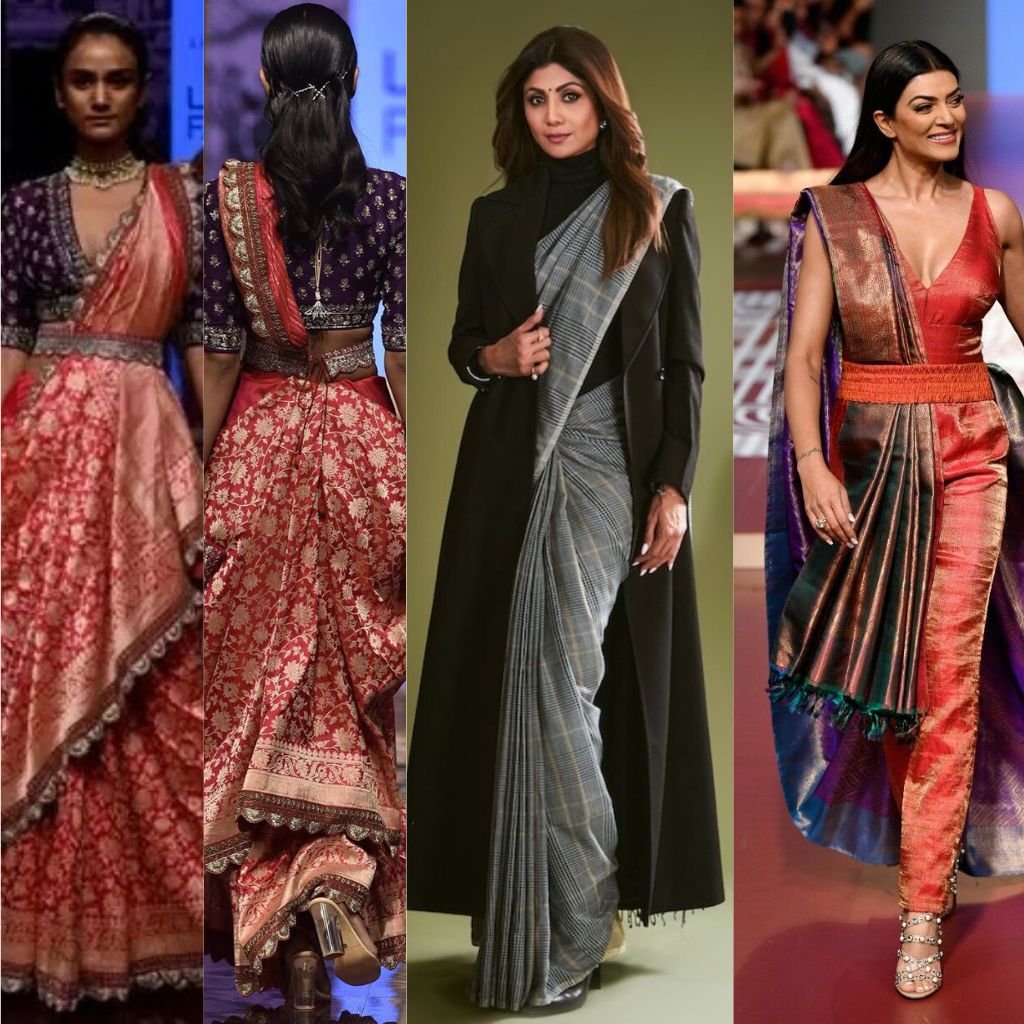
In today’s modern times, the saree is not just limited to traditional wear; new designers or people who wear sarees daily are discovering and experiencing new styles of wearing sarees. Cotton or silk sarees are evergreen; apart from that, many lightweight fabrics like chiffon, georgette, linen, and blended fabric have made sarees light and stylish, making them easy to wear daily, and their popularity has increased among the young generation.
Since the saree is a symbol of women’s empowerment, the trend of sarees has increased among modern-day working women, be it in the corporate world or not. A saree is not only a power dressing choice but also an elegant and professional dress.
Modern-day designers have given a contemporary or fusion look to sarees, like pairing combinations of stylish blouses, shirts, pants, belts, jackets, etc., lengha sarees, pre-stitched sarees, etc.
International fashion icons or Bollywood celebrities have given an international platform to the saree in red carpet appearances and international fashion shows. The saree has also proved its adaptability or versatility.
Overview
Introduction
The saree is an Indian heritage. This evergreen garment represents timeless beauty, craftsmanship, regional culture, and tradition.
Origin of Saree
The saree, a garment invented more than 5,000 years ago, is still the preferred choice of modern women. The saree is considered a primordial garment.
Evolution of Saree
The saree has been worn continuously since the Indus civilisation and continues to live on today with new styles and influences. Terracotta sculptures reveal the origins of the saree.
Vedic period: The Three-part draping style was documented in the Vedas and Puranas.
Mughal era: The amazing weaving techniques of the Mughals and innovative artisans have transformed the ordinary saree into a status symbol.
Colonial era: The combination of a blouse and petticoat made the saree more modest.
Pre-independence: The saree was a warrior uniform and an identity of freedom fighters.
Post-independence: Political leaders adopted the saree as national pride, and the Bollywood industry gave it a more modern elegance.
Modern Day Saree: The saree has established itself in the corporate world and on international fashion stages and is highly appreciated in India and abroad.
Conclusion
From the Indus Valley till now, the saree has been an icon of beauty, strength, pride, and women’s empowerment.
The creation of a thread and the completion of the saree, from that thread it’s a journey itself. This sacred garment passes through the hands of countless skilled artisans. At Sparrow Textiles, this is an attempt to keep alive the craftsmanship that has been going on for centuries and to inspire the coming generations to take this heritage forward. The joy of those who wear it soothes our fatigue.
So come and join us and discover a collection of sarees crafted with traditional craftsmanship and modern technology. Each saree will exude beauty, charm, comfort, elegance, strength, or versatility. Shop for the best saree at Sparrow Textiles, offering a range of sarees from daily wear to all occasions.